Presentation given to VéloCity Global Conference, Adelaide, 2014.
A ‘sketch’, comparing New Zealand and Ireland, on the implementation of policies to promote cycling uptake.

Click on image for PDF (1.0 Mb)


17 Bargy Road East Wall Dublin 3 D03 VY60 Ireland • +353 86 6088843 • email
Presentation given to VéloCity Global Conference, Adelaide, 2014.
A ‘sketch’, comparing New Zealand and Ireland, on the implementation of policies to promote cycling uptake.
Click on image for PDF (1.0 Mb)
Every year there’s a global get-together for all those interested in the promotion of cycling. Transportation experts, mayors, town councillors, consultants for ‘liveable cities’, documentary film-makers -and of course cycling advocates- attend the Vélo-city Global Conference. The European Cycling Federation organises the event, and this year it was held in Adelaide, South Australia. Nearly 600 delegates attended.
[print_gllr id=4729] read more
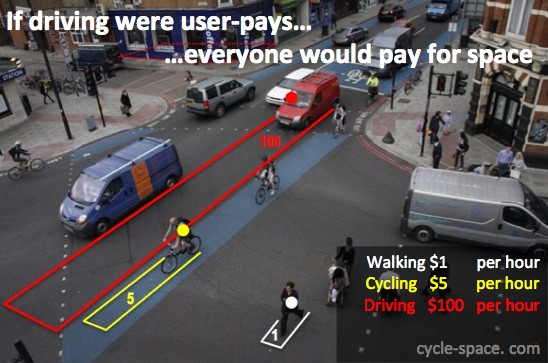
This fantastic graphic says it all, really-
Information on Steven Fleming’s book ‘Cycle Space’ is at http://cycle-space.com/
OK call me uncool for enthusing about yet another policy document but it’s nothing short of wonderful to see responsible parties finally joining the dots between poor, car-dependent planning and our obesity crisis!
This is the UK’s Department of Health, through a subsidiary office, Public Health England, working with the organisation that co-ordinates local governments throughout England and Wales, to promote more sensible planning after decades of obesogenic developments. May it grow big teeth and play its part in our progress towards healthier towns and cities.
Good to see a health-policy briefing listing off our favourite advantages of increased cycling and walking-
• supports local businesses and promotes vibrant town centres
• provides a high-quality, appealing public realm
• reduces car travel, air pollution, carbon dioxide emissions and congestion
• reduces road danger and noise • increases the number of people of all ages out on the streets, making public spaces seem more welcoming and providing opportunities for social interaction and children’s play
• provides an opportunity for everyone, including people with impairments, to exerience and enjoy the outdoor environment
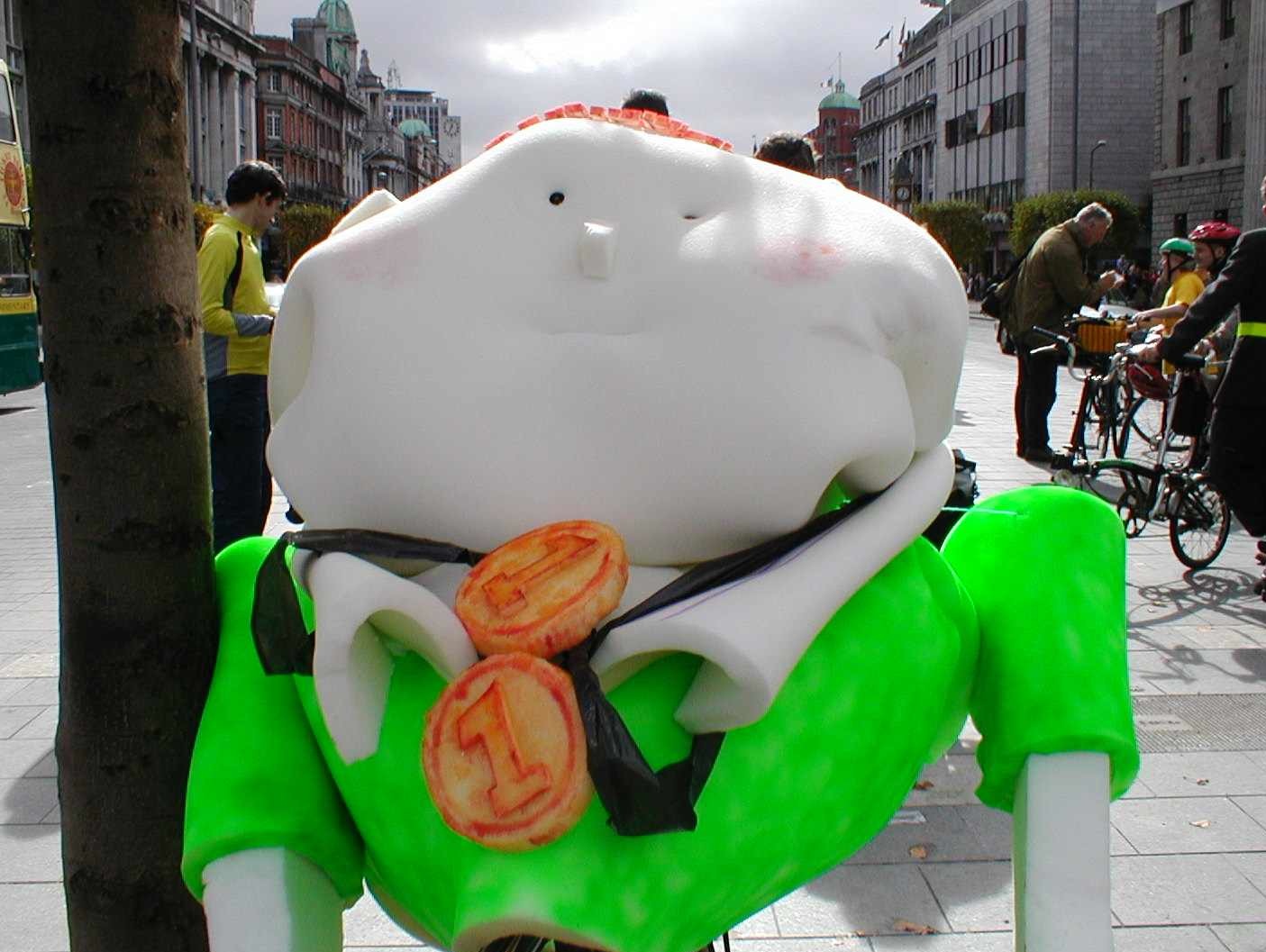
UK National Health Service statistics have shown that between 2000 and 2009 in England and Wale, the number of 5 to 19 year olds admitted to hospital with obesity related issues have increased from 872 to 3,806.
The Telegraph newspaper quotes Prof. Ashton as saying, “public health efforts must focus on town planning as much as on general health” and proposing drop-off points a ‘quarter-mile’ from school gates.
“One of the things we should be doing is really strictly prohibiting cars stopping outside school to drop kids off but having drop-off points, if at all, a few hundred yards away so at least the children get to walk a quarter of a mile each day from the dropping-off point … it would make a difference,” he told the newspaper
These are subjective impressions. My experience of cycling in SF includes working as a courier in the downtown area over 20 years ago, brief cycling visits since, and anecdotes from many cycling friends. read more
This courtesy of Atlantic Cities-
Post columnist Brad Plumer writes that surveys have concluded young people “prefer to live places where they can easily walk, bike, and take public transportation.” Also that with higher petrol prices, more stringent driver-license systems, communication being carried out more & more online, and younger people preferring to live in denser, more diverse neighbourhoods, the decline of car use -and corresponding increases in public and non-motorised transport- is set to continue.

Looked at this way, the plunge in driving is quite startling, and began back in June 2005.

Remarkably, presiding National Party transport minister Gerry Brownlee immediately insisted in a statement that congestion caused by excess car use and under-controlled urban sprawl is not to be questioned or challenged.
According to Radio NZ, ‘Transport Minister Gerry Brownlee, who hasn’t read the report, said a regional fuel tax, congestion charges and road tolls as they stand would never be agreed to. Mr Brownlee said New Zealanders ‘won’t be paying twice for roads’ when money has been generated through their excise duty or road user charges, while a congestion charge would not be appropriate on government-owned roads.’ Have motorists even paid once for these roads? Or does he expect the rest of us to support motorists’ expensive habits?
Fairfax Media reports, ‘A group of Auckland’s business and community leaders, convened by mayor Len Brown to give its view on funding projects to solve the city’s transport crisis, is today calling for public feedback on two funding options. Group chairman Stewart Milne says Auckland faces a $12 billion transport funding shortfall by 2041 if nothing is done. Employers and Manufacturers Association chief executive Kim Campbell says the city will suffer if nothing happens: “Finally when the place comes to a grinding halt, that’s when people leave. We don’t think that’s a responsible view.”
“Our population is projected to grow by as much as 1 million, with around 60 per cent of that coming from our existing populace”, says Brown.
The public is being asked to submit feedback on the group’s proposals before it makes its recommendations to Auckland Council in July.’ (Scott Morgan, Stuff.co.nz, 2013- April 29th)
This the same day that John Key was wheeled out for a conference of petroleum industry representatives in Auckland to tout oil exploration by ‘large oil companies’ in off-shore claim areas. Hmmmm…
I’m not up to date with the issues but it certainly seems remarkable that funding challenges of up to $12 billion can be discussed by senior Government members without reference to the Unitary Plan, denser urban planning, and the concepts of reducing transport needs from unnecessary car trips.
And looking beyond this current spat, it looks like some of the problems arising from virulent car-dependent sprawl are coming home to roost.

 Hand of Stoke
And that list of Wonders doesn’t include our very own astronomer- Albert Jones, only coming to our attention in September 2013 just after he has gone before us into the stars. Rest in peace, Albert, we are heartened for your gifts to Stoke.
Some words about Albert from the blog, Simostronomy-” This quiet, unassuming New Zealander has made over 500,000 variable star measurements over the last 60 years or so. He has received honors from the Royal Society of New Zealand, the American Association of Variable Star Observers, the Smithsonian Astrophysical Observatory, the Astronomical Society of the Pacific, the British Astronomical Association, the Royal Astronomical Society, and has received an Honorary Doctorate of Science from Victoria University in Wellington, New Zealand.
In 1964 he was made one of the first four Fellows of the Royal Astronomical Society of New Zealand, and in 1987 he was awarded an Order of the British Empire (OBE) for his services to astronomy. Minor planet 3152 was named after him in 1988 in recognition of his achievements
Albert told Somostronomy, ‘After I left school at the age of 16, I was well aware of my limited knowledge and never dreamed that one day I might be able to make a contribution to Astronomy, but for my own fun, and to satisfy my curiosity, I could at least learn the constellations and be able to recognize planets. So with the aid of books, I did that.
‘Then in answer to a request in the newspaper for reports of aurorae, I made detailed notes of the next aurora that I saw, sent it in and was thrilled with the reply stating it was the best report received. So two years later, I timidly asked if there was an astronomy club or society that might accept me as a member. Soon after, I became a member of the New Zealand Astronomical Society (later to become the Royal Astronomical Society New Zealand; RASNZ). Then I started receiving their journal ‘Southern Stars’”.
I often wondered why there were screens on some street lights outside Albert’s house, a minute’s walk from ours on Ranui Road. Turns out they were screened by Council on request from the US’ NASA- Albert’s work was so valuable to them that they sent a letter backing his request for less light spill onto his observatory!
Truly a wonder of his own.
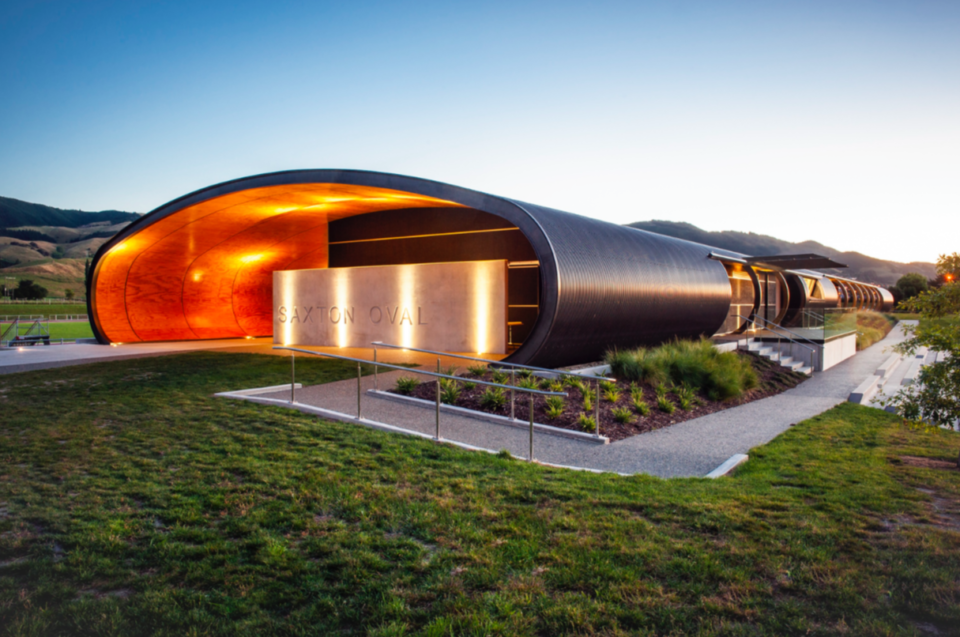 Arthouse Architects’ stunning pavilion at Saxton Field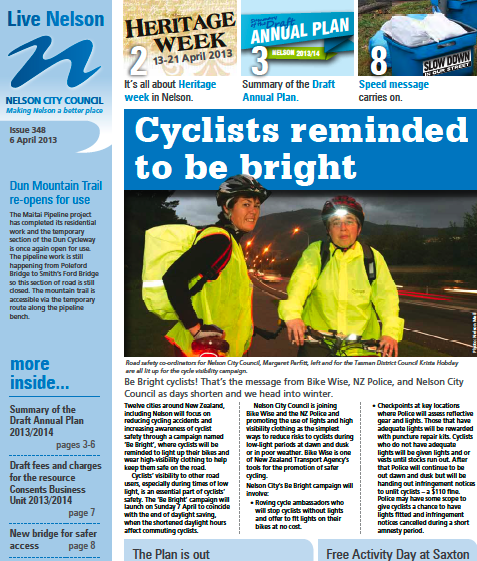
In sharing the road with motorists, where is the risk to cyclists being created? From the motor vehicles, of course. So who should we educate and nag? Yes, well done. Those wielding over-powered heavy fast-moving metal objects.
If we’ve got funding for road safety measures, let’s improve driver standards by promotional campaigns, better driver training, lower speed limits, ongoing skills tests, higher enforcement before blaming the victims of poor driving.
 Hello
Hello